

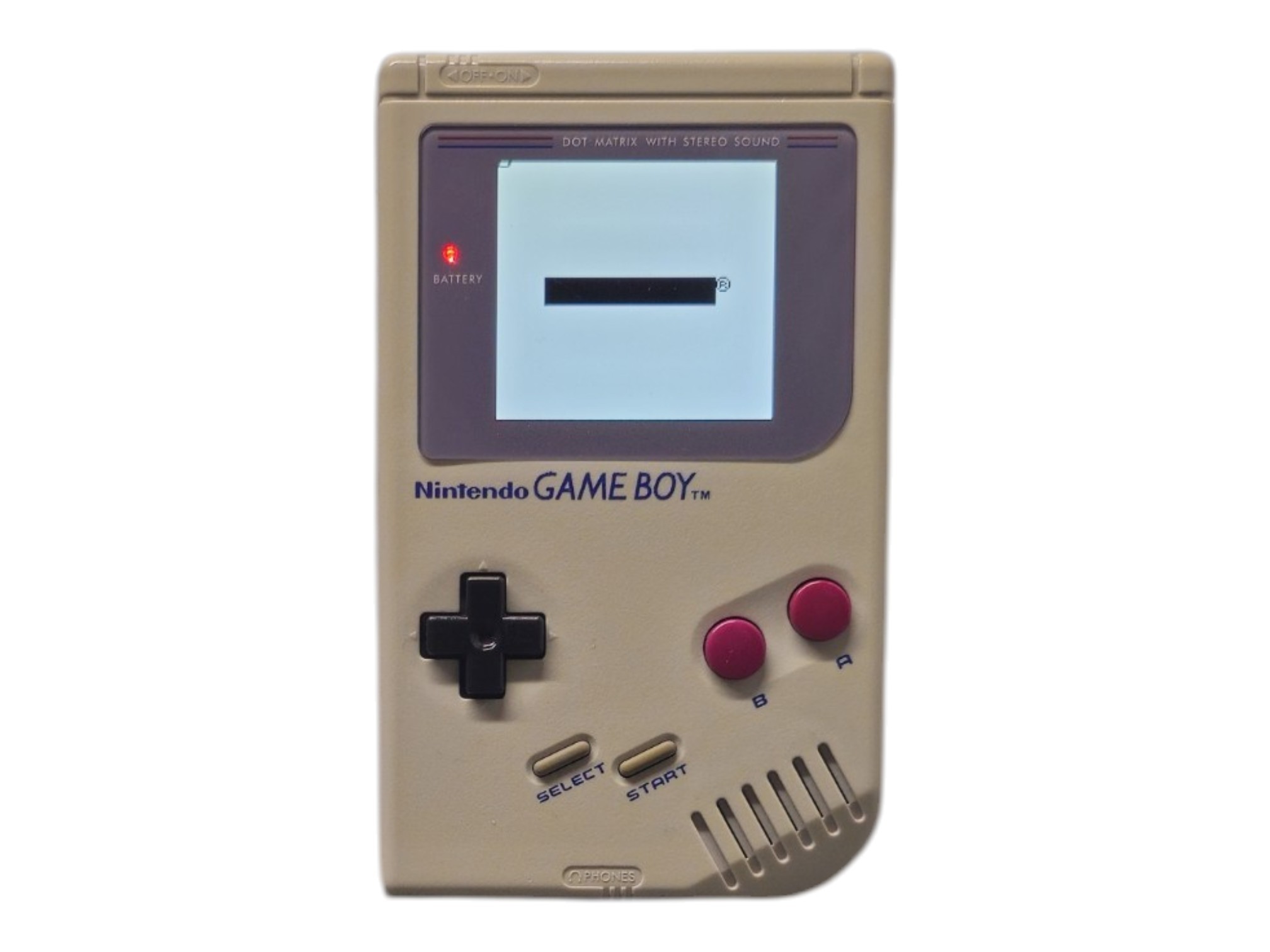
The Nintendo Game Boy IPS Mod represents a fascinating combination of classic gaming history and modern display technology. Based on Nintendo’s legendary original Game Boy DMG-01, first released in 1989, this modified handheld preserves the iconic design and authentic gaming architecture of one of the world’s most influential consoles while replacing its original monochrome LCD with a modern backlit IPS display.
The result is a unique blend of nostalgia and practicality. Classic Game Boy games retain their original gameplay, sound, and controls, but can now be enjoyed with significantly improved brightness, contrast, clarity, and viewing angles.
With timeless titles such as Tetris, Super Mario Land, The Legend of Zelda: Link’s Awakening, and Pokémon Red and Blue, the IPS-modified Game Boy demonstrates how modern technology can breathe new life into vintage gaming hardware without abandoning its historical identity.
More than three decades after the original Game Boy’s introduction, these modifications have become an important part of the retro gaming and hardware preservation community.
📘 Introduction
The original Nintendo Game Boy DMG-01 was introduced in Japan on April 21, 1989, before reaching North America later that year and Europe in 1990.
Designed under the leadership of Gunpei Yokoi, the Game Boy revolutionised portable entertainment through its combination of affordable hardware, exceptional battery efficiency, durable construction, and an extraordinary software library.
However, one of its most recognisable features was also one of its greatest limitations: the original reflective monochrome LCD.
The display required external lighting and suffered from relatively slow pixel response times, producing the characteristic motion blur associated with early handheld gaming.
Modern IPS modifications address these limitations by replacing the original screen with a contemporary illuminated display.
The modified system retains the original Game Boy’s essential hardware architecture while dramatically improving image visibility.
Importantly, the Game Boy IPS Mod is not an official Nintendo hardware revision.
It is a modern aftermarket modification performed on original Game Boy hardware.
This distinction makes it particularly interesting from a historical perspective, as it demonstrates the continued evolution of vintage technology through community-driven innovation.
🏭 The Original Game Boy: A Handheld Revolution
The history of the Game Boy IPS Mod begins with one of Nintendo’s greatest commercial achievements.
During the 1980s, Nintendo had already established a successful presence in portable entertainment through its Game & Watch series.
These compact electronic games demonstrated that simple, battery-powered entertainment could attract a large audience.
The Game Boy expanded this idea by introducing interchangeable game cartridges.
Instead of purchasing a separate device for each game, players could enjoy an expanding software library on a single handheld console.
Nintendo’s Design Philosophy
The original Game Boy prioritised:
- Affordable manufacturing
- Long battery life
- Durable construction
- Simple and familiar controls
- Compact game cartridges
- Reliable everyday operation
- Strong software support
Nintendo deliberately avoided expensive colour display technology in favour of a more efficient monochrome screen.
This approach helped the Game Boy outperform several technologically more advanced competitors.
The machine became a cultural phenomenon and established the foundations of Nintendo’s highly successful handheld gaming business.
Decades later, the same design continues to inspire enthusiasts who restore, modify, and preserve original hardware.
🖥️ The Iconic DMG-01 Design
One of the most appealing characteristics of an IPS-modified Game Boy is the preservation of the original console’s recognisable appearance.
The DMG-01 features a distinctive rectangular enclosure with a large screen area, directional controls, and prominent speaker openings.
Its classic appearance includes:
- Grey vertical enclosure
- Black directional pad
- Burgundy-coloured A and B buttons
- Start and Select buttons
- Integrated speaker
- Rear cartridge slot
- Battery compartment
- Headphone connector
- External power connection
- Adjustable volume control
The original Game Boy measures approximately 148 × 90 × 32 mm.
Its relatively substantial enclosure earned it the affectionate nickname “the brick”.
Although later handheld systems became considerably smaller and lighter, the Game Boy’s design remains instantly recognisable.
Preserving the Original Appearance
Many IPS modifications retain the familiar appearance of the DMG-01.
Depending on the installation, enthusiasts may preserve the original enclosure, buttons, speaker, and cartridge connector.
Other modifications use replacement shells or screen lenses to accommodate larger displays.
The console’s classic design is one of the reasons IPS conversions have become so popular.
They allow players to experience the original Game Boy’s physical controls and nostalgic appearance while benefiting from modern screen technology.
⚙️ Technical Specifications
The Game Boy IPS Mod combines the original Nintendo hardware architecture with a modern replacement display.
It is important to distinguish the specifications of the original console from those of the aftermarket modification.
Original Game Boy Hardware
- Manufacturer: Nintendo
- Original model: Game Boy DMG-01
- Original release year: 1989
- Hardware generation: Fourth-generation handheld console
- CPU: Custom Sharp 8-bit processor
- Architecture: Sharp SM83
- Clock speed: Approximately 4.19 MHz
- Main RAM: 8 KB
- Video RAM: 8 KB
- Native graphics resolution: 160×144 pixels
- Original display: Reflective STN LCD
- Original display shades: Four monochrome shades
- Sound: Four-channel programmable audio
- Built-in speaker: Mono
- Headphone output: Stereo
- Storage medium: ROM cartridges
- Multiplayer: Game Link port
- Original power system: Four AA batteries
Modern IPS Modification
- Display technology: IPS LCD
- Illumination: Integrated backlight
- Improved viewing angles: Yes
- Improved contrast: Yes
- Reduced motion blur: Yes
- Adjustable brightness: Available on many IPS kits
- Alternative colour palettes: Available on selected kits
- Pixel-grid simulation: Available on selected kits
- Display scaling: Depends on the installed IPS controller
- Original game compatibility: Retained through the original console hardware
The exact screen resolution, colour options, brightness controls, and additional functions depend on the particular aftermarket IPS kit installed.
The original Game Boy’s game logic and native graphical output remain fundamentally unchanged.
The modification primarily alters how the image is displayed.
🌈 What Is IPS Display Technology?
IPS stands for In-Plane Switching, a type of LCD technology designed to provide consistent colours, improved viewing angles, and better image quality.
IPS technology is widely used in modern computer monitors, tablets, smartphones, and other electronic devices.
When adapted for vintage handheld consoles, it offers substantial improvements over early reflective LCD technology.
Advantages of IPS Displays
- Bright and evenly illuminated image
- High contrast
- Wide viewing angles
- Improved pixel response
- More consistent image quality
- Reduced ghosting
- Better visibility in dark environments
- Adjustable display settings on supported kits
These improvements make classic Game Boy games easier to enjoy under modern lighting conditions.
The Importance of the Backlight
The original Game Boy did not include an internal backlight.
Players had to position the console near a light source or use an external accessory.
An IPS display includes its own illumination system.
This means the modified Game Boy can be used in environments where the original screen would have been difficult or impossible to see clearly.
The difference is particularly noticeable when playing indoors, during the evening, or under uneven lighting.
🟩 Original LCD vs. Modern IPS Screen
The difference between the original Game Boy display and a modern IPS replacement is dramatic.
Although both screens display the same underlying game graphics, their visual characteristics are considerably different.
Original Nintendo LCD (1989)
- Reflective monochrome display
- Characteristic greenish appearance
- Four shades
- No internal backlight
- Relatively slow pixel response
- Noticeable motion blur
- Narrower practical viewing angles
- Very low power consumption
Modern IPS Display
- Backlit LCD technology
- Sharper-looking image
- Improved contrast
- Wide viewing angles
- Reduced ghosting
- Better visibility in low light
- Adjustable brightness on many kits
- Optional colour and pixel effects on selected models
A Completely Different Viewing Experience
One of the most significant improvements concerns motion clarity.
The original display could produce visible trails behind moving objects.
In fast-paced games, this sometimes made the action difficult to follow.
A modern IPS panel responds much more quickly, reducing the visual blur associated with the original screen.
Games such as Super Mario Land, Tetris, and Metroid II can therefore appear noticeably clearer.
However, this improvement also changes the original visual character of the system.
Some enthusiasts prefer the authentic green-tinted screen, while others appreciate the improved readability of modern IPS technology.
Both experiences represent different approaches to enjoying classic hardware.
🎨 Colour Palettes & Visual Customisation
One interesting feature of many modern Game Boy IPS kits is the ability to change the displayed colour palette.
Although original DMG-01 games were designed around four monochrome shades, IPS controllers can map those shades to different colours.
Depending on the installed kit, available options may include:
- Classic Game Boy green
- Black and white
- Blue-tinted monochrome
- Amber or yellow
- Inverted colours
- Customisable colour combinations
Recreating the Original Appearance
Some kits include a classic green palette designed to resemble the original Game Boy display.
This allows players to enjoy the familiar colour scheme while benefiting from modern illumination and improved pixel response.
Modern Monochrome Presentation
Black-and-white palettes can provide a particularly sharp appearance.
The improved contrast may make text, sprites, and environmental details easier to distinguish.
Pixel-Grid Effects
Certain IPS kits also include optional pixel-grid filters.
These effects attempt to reproduce the visible spacing and structure of older LCD pixels.
They can help preserve part of the original display’s visual character while retaining the convenience of a modern screen.
The availability and operation of these options depend on the exact IPS kit installed.
🔧 How the IPS Modification Works
An IPS screen modification generally involves replacing the original Game Boy display assembly with a modern LCD panel and compatible controller electronics.
The replacement screen receives the video information generated by the original Game Boy hardware and converts it into a format suitable for the new display.
Typical Components
A modern IPS kit may include:
- IPS LCD panel
- Display controller board
- Ribbon cables
- Mounting brackets
- Replacement screen lens
- Brightness controls
- Optional touch sensors
- Additional wiring
Some kits also include custom circuit boards designed specifically for the original DMG-01.
Installation Process
The modification generally involves:
- Opening the original Game Boy enclosure
- Disconnecting the original display assembly
- Installing the IPS screen and controller
- Connecting the replacement display to the original hardware
- Completing any required wiring
- Testing image and control functionality
- Reassembling the console
Some kits require soldering or internal shell modifications, while others are designed to minimise permanent changes.
The precise procedure varies between manufacturers and hardware revisions.
Preserving Original Components
For collectors, retaining the original LCD and associated components is an important consideration.
Even when the original display is no longer installed, preserving it allows the system’s historical configuration to be documented.
Where practical, reversible modifications provide additional preservation flexibility.
🧠 Original Processing Power, Modern Display
An important characteristic of the Game Boy IPS Mod is that replacing the screen does not automatically increase the console’s processing power.
The original Game Boy remains an 8-bit system operating at approximately 4.19 MHz.
Its CPU, memory architecture, and native graphical capabilities continue to determine how games run.
What Remains Original
When the original motherboard is retained, the following capabilities remain fundamentally unchanged:
- Processor performance
- Game logic
- Native graphics generation
- Game speed and timing
- Cartridge compatibility
- Audio generation
- Multiplayer communication
- Original game controls
What Changes
The display modification affects:
- Screen illumination
- Image visibility
- Viewing angles
- Pixel presentation
- Motion clarity
- Display colours on supported kits
The distinction is important.
An IPS screen does not turn the original Game Boy into a Game Boy Color or increase the graphical detail contained in its games.
Instead, it provides a new way of displaying the original system’s graphics.
This approach is particularly appealing because it combines authentic game execution with a more comfortable modern viewing experience.
🎮 Games & Software Library
One of the greatest advantages of an IPS-modified Game Boy is its compatibility with the classic Game Boy game library.
Because the modification normally retains the original Nintendo motherboard and cartridge connector, authentic Game Boy cartridges continue to operate as originally intended.
Some of the most memorable compatible games include:
- Tetris
- Super Mario Land
- Super Mario Land 2: 6 Golden Coins
- Wario Land: Super Mario Land 3
- The Legend of Zelda: Link’s Awakening
- Pokémon Red
- Pokémon Blue
- Pokémon Yellow
- Kirby’s Dream Land
- Kirby’s Dream Land 2
- Metroid II: Return of Samus
- Donkey Kong (1994)
- Donkey Kong Land
- Dr. Mario
- Balloon Kid
- Alleyway
- Gargoyle’s Quest
- Castlevania II: Belmont’s Revenge
- Mega Man: Dr. Wily’s Revenge
- Final Fantasy Adventure
- Final Fantasy Legend
- DuckTales
- R-Type
- SolarStriker
- Kid Icarus: Of Myths and Monsters
The upgraded display can make certain games particularly enjoyable.
Fast-moving sprites, detailed backgrounds, and small text become easier to distinguish.
However, the software itself remains unchanged.
The original timing, animations, sound, and gameplay mechanics continue to reflect the limitations and design decisions of the original Game Boy platform.
🧩 Tetris: A Classic Reimagined
Few games demonstrate the advantages of an IPS modification as clearly as Tetris.
Released for Game Boy in 1989, Tetris became one of the defining titles of Nintendo’s handheld platform.
Its simple graphics, addictive gameplay, and memorable music made it suitable for players of all ages.
Why Tetris Benefits from IPS
The game’s falling blocks and rapidly changing playfield are particularly well suited to a modern display.
An IPS screen provides:
- Clearer block outlines
- Reduced motion blur
- Improved contrast
- Easier visibility in low light
- More consistent viewing from different angles
As the game becomes faster, the improved screen response can make the movement easier to follow.
The Original Gameplay Remains
Despite these visual improvements, the fundamental gameplay remains exactly as it was designed.
Players still rotate and position falling blocks to complete horizontal lines.
The famous music and increasingly demanding gameplay remain central to the experience.
The IPS modification simply makes this timeless puzzle game more convenient to enjoy today.
🍄 Super Mario Land: Classic Platforming with Modern Clarity
Another game that benefits from a modern IPS display is Super Mario Land.
Originally released in 1989, the game introduced Nintendo’s famous character to portable gaming.
Its compact sprites and fast-moving gameplay were designed specifically for the Game Boy’s small monochrome screen.
Improved Visual Clarity
A modern IPS display can make several elements easier to distinguish:
- Mario’s character sprite
- Moving enemies
- Environmental details
- Platforms and obstacles
- Background patterns
- On-screen text
The reduction in motion blur is particularly noticeable during scrolling and fast movement.
Preserving the Original Experience
Super Mario Land remains a classic example of efficient game design.
Its memorable soundtrack, responsive controls, and imaginative levels demonstrate how much developers achieved with limited hardware.
The IPS modification preserves these qualities while providing a more comfortable viewing experience.
⚡ Pokémon: A New Way to Explore Kanto
The original Pokémon games represent another important part of the Game Boy’s history.
Released in Japan in 1996 and internationally during the following years, Pokémon transformed the handheld console into a social gaming phenomenon.
The original games introduced players to a world of exploration, creature collection, and strategic battles.
Advantages of the IPS Display
Pokémon games contain extensive text, menus, maps, and detailed character sprites.
An IPS modification can improve:
- Text readability
- Menu clarity
- Battle presentation
- Map visibility
- Character detail
- Gameplay comfort during extended sessions
The Original Game Boy Experience
Even with an upgraded screen, Pokémon Red, Blue, and Yellow continue to operate within the original Game Boy’s hardware limitations.
The games retain their familiar music, turn-based battles, and distinctive graphical style.
The original Game Link Cable functionality can also remain available when the console’s original communication hardware is preserved.
This allows players to enjoy a familiar Pokémon experience using authentic hardware.
🎵 The Legendary Four-Channel Sound
The Game Boy IPS Mod retains one of the original system’s most recognisable features: its distinctive audio hardware.
The original console uses a four-channel programmable sound system.
Audio Channels
- Two pulse-wave channels
- One programmable waveform channel
- One noise channel
These channels can produce melodies, bass lines, percussion, and sound effects.
The built-in speaker reproduces mono audio, while compatible headphones can provide stereo output.
An Unchanged Audio Experience
A screen-only IPS modification does not inherently alter the Game Boy’s sound generation.
Classic soundtracks retain their familiar character.
Games such as Tetris, Super Mario Land, Pokémon, and The Legend of Zelda: Link’s Awakening continue to sound fundamentally as they did on original hardware.
The Game Boy Chiptune Legacy
The Game Boy’s audio architecture also became popular among electronic musicians.
Specialised software allows original Game Boy hardware to function as a musical instrument.
This contributed to the development of modern chiptune music and helped preserve interest in Nintendo’s 8-bit audio technology.
An IPS-modified console can therefore remain useful not only for gaming but also for enthusiasts interested in original Game Boy music applications.
🔋 Battery Life & Power Consumption
One of the original Game Boy’s greatest achievements was its exceptional battery efficiency.
The DMG-01 was designed to operate using four AA batteries.
Its reflective LCD consumed relatively little power because it did not require a backlight.
The Effect of an IPS Screen
A modern IPS display introduces additional power requirements.
The backlight and display controller generally consume more electricity than the original reflective LCD.
As a result, battery life may be shorter than that of an unmodified Game Boy.
The exact difference depends on:
- Installed IPS kit
- Screen brightness
- Battery type
- Battery condition
- Additional hardware modifications
- Operating conditions
Brightness and Efficiency
Many IPS kits allow users to reduce screen brightness.
Lower brightness settings can help reduce power consumption.
This provides a useful balance between image quality and battery life.
Modern Battery Upgrades
Some enthusiasts combine IPS modifications with rechargeable battery systems.
These can include:
- Rechargeable AA batteries
- Compatible lithium-ion battery kits
- USB-C charging modifications
- Replacement power regulation components
However, these upgrades are separate from the IPS screen modification itself.
An IPS display does not automatically mean the console has rechargeable batteries or USB-C charging.
For collectors, documenting the exact power configuration is important when identifying a modified unit.
🕹️ Original Controls & Authentic Gameplay
One of the most important advantages of modifying an original Game Boy rather than using an emulator-based handheld is the preservation of authentic Nintendo controls.
The DMG-01 features:
- Directional pad
- A button
- B button
- Start button
- Select button
These controls were designed specifically for the original hardware and software library.
The Importance of Original Hardware
When the original motherboard and controls are retained, players continue using the same basic input system found in 1989.
The familiar button arrangement remains suitable for platform games, puzzle titles, role-playing games, and action adventures.
Authentic Game Cartridges
The console also retains compatibility with original Game Boy cartridges when its original cartridge hardware remains intact.
This allows collectors to enjoy physical games rather than relying exclusively on software emulation.
The combination of authentic controls, original cartridges, and a modern screen is one of the main attractions of the Game Boy IPS Mod.
🔗 Game Link Cable & Original Accessories
A screen modification does not normally prevent the Game Boy from using its original external accessories.
When the original ports and supporting circuitry are preserved, compatible accessories can continue to function.
These include:
- Game Link Cable
- Compatible headphones
- External power adapters
- Game Boy Camera
- Game Boy Printer with the appropriate cable
- Original game cartridges
- Compatible carrying cases
Local Multiplayer
The original Game Link Cable allows compatible Game Boy games to exchange data between consoles.
This remains particularly important for titles such as:
- Tetris
- Pokémon Red
- Pokémon Blue
- Pokémon Yellow
The link functionality makes it possible to preserve the social aspects of early handheld gaming.
Modern Display, Classic Connectivity
The Game Boy IPS Mod is therefore more than a modernised screen.
It can remain part of the original Game Boy hardware ecosystem.
For collectors, this is particularly valuable because it allows original games and accessories to remain functional while improving everyday usability.
🔄 Game Boy Original vs. Game Boy IPS Mod
Although both systems share the same historical hardware foundation, they provide noticeably different user experiences.
Original Nintendo Game Boy DMG-01
- Released in 1989
- Original reflective monochrome LCD
- Characteristic greenish display
- Four shades
- No backlight
- Noticeable LCD ghosting
- Excellent battery efficiency
- Fully authentic original display technology
- Historically accurate visual presentation
Nintendo Game Boy IPS Mod
- Based on original DMG-01 hardware
- Modern aftermarket IPS screen
- Integrated backlight
- Improved contrast
- Wide viewing angles
- Reduced motion blur
- Optional colour palettes on supported kits
- Adjustable brightness on many kits
- Potentially increased power consumption
- Modernised visual presentation
Which Version Is Better?
The answer depends on the purpose of the console.
For historical authenticity, an original unmodified DMG-01 provides the most accurate representation of Nintendo’s 1989 technology.
For everyday gaming, an IPS-modified unit can offer a significantly more comfortable visual experience.
Both configurations have value.
The original represents the technological achievements and limitations of its era.
The IPS modification demonstrates how modern technology can extend the usefulness of historic hardware.
For a technology museum, displaying both versions provides an especially interesting comparison.
🛠️ The Game Boy Modding Community
The original Game Boy has developed one of the most active modification communities in retro gaming.
Enthusiasts around the world continue developing replacement components, display upgrades, audio improvements, and power modifications.
Popular Game Boy Modifications
- IPS screen replacements
- Backlight installations
- Replacement shells
- Custom buttons
- Glass screen lenses
- Rechargeable battery systems
- USB-C charging
- Audio amplification upgrades
- Speaker replacements
- Power regulation improvements
Not every modified Game Boy includes all these features.
Each console may have a different combination of original and modern components.
Why Modding Became Popular
Several factors contributed to the popularity of Game Boy modifications:
- Large numbers of surviving original consoles
- Relatively straightforward hardware architecture
- Availability of replacement components
- Strong nostalgic interest
- Active online communities
- Continued popularity of original games
- Growing interest in electronics restoration
The Game Boy’s durable design and extensive documentation make it an attractive platform for experimentation.
A New Generation of Enthusiasts
Modding has also introduced younger audiences to vintage Nintendo hardware.
People who never owned a Game Boy during the 1990s can experience the original games using modernised systems.
This helps preserve interest in the platform and encourages the continued development of replacement parts and maintenance techniques.
🌍 Retro Gaming Culture & Modern Popularity
The original Game Boy became a worldwide phenomenon during the 1990s.
Its compact design, durable construction, and successful software catalogue established it as one of Nintendo’s most important products.
The combined Game Boy and Game Boy Color family eventually achieved approximately 118.69 million worldwide sales.
Decades later, the original Game Boy remains highly recognisable.
The Rise of Retro Gaming
Interest in vintage gaming hardware has increased the popularity of restoration and modification projects.
Enthusiasts appreciate the ability to experience classic games on original equipment.
However, ageing screens, batteries, and other components can make everyday use less convenient.
Modern modifications provide an alternative to replacing original hardware with entirely new devices.
The Game Boy IPS Mod in Today’s Gaming Culture
IPS-modified Game Boys are particularly popular because they combine:
- Nostalgic appearance
- Authentic game compatibility
- Modern screen visibility
- Familiar controls
- Customisable aesthetics
- Practical everyday usability
These systems also appear frequently in retro gaming exhibitions, restoration projects, and personal collections.
They demonstrate the continuing relevance of hardware originally designed more than three decades ago.
🔧 Maintenance & Long-Term Reliability
Although the IPS modification improves display technology, the rest of the original Game Boy remains vintage electronic hardware.
The console may therefore require maintenance to ensure long-term reliability.
Important Maintenance Areas
- Battery terminals
- Cartridge connector
- Power switch
- Audio components
- Button contacts
- Display ribbon connections
- IPS controller board
- Internal wiring
- Power regulation circuitry
Battery Corrosion
Original Game Boy systems are particularly vulnerable to damage caused by leaking AA batteries.
Corrosion can affect the battery contacts and surrounding components.
Batteries should be removed during extended storage unless the device uses a properly managed rechargeable system designed for that purpose.
IPS Screen Connections
Modern replacement displays introduce additional connectors and circuit boards.
Loose ribbon cables or poor electrical connections can cause:
- Blank screens
- Intermittent images
- Display flickering
- Incorrect colours
- Brightness control problems
Proper installation and careful cable routing are essential.
Power Requirements
Some IPS kits consume more power than the original LCD.
It is important to ensure that the console’s power system is suitable for the installed hardware.
Additional modifications, such as aftermarket audio amplifiers or flash cartridges, can further increase power demand.
Preservation Practices
For long-term storage, collectors should maintain a stable environment with controlled humidity and moderate temperatures.
Original components removed during restoration should ideally be preserved and labelled.
This helps document the history of the modified device.
⭐ Why the Game Boy IPS Mod Still Matters
The Nintendo Game Boy IPS Mod represents an interesting intersection of computing history, hardware preservation, and modern technology.
Its significance comes from several factors:
- It preserves the original Game Boy hardware architecture
- It improves the usability of a historic console
- It demonstrates the evolution of LCD technology
- It reduces the limitations of the original reflective display
- It retains compatibility with classic games
- It supports the continued use of physical cartridges
- It reflects the creativity of the retro gaming community
- It provides a practical alternative to software emulation
- It encourages electronics restoration and maintenance
- It connects a new generation of players with gaming history
The Game Boy IPS Mod also raises an important question about technological preservation.
Should vintage devices remain entirely unchanged, or can carefully documented modifications help preserve their usefulness?
Both approaches have merit.
Original hardware preserves the authentic technological experience of its era.
Modified hardware demonstrates how enthusiasts continue adapting historic machines to modern expectations.
Together, they provide a more complete understanding of the relationship between technology, nostalgia, and innovation.
🏛️ Collectability & Historical Preservation
IPS-modified Game Boys occupy a distinct category within the retro gaming market.
Unlike completely original examples, modified consoles combine genuine Nintendo hardware with modern aftermarket components.
Their appeal often depends on the quality of the modification and the condition of the underlying system.
Important Collecting Considerations
- Authentic original motherboard
- Correct DMG-01 hardware identification
- Quality of the installed IPS display
- Condition of the enclosure
- Original or replacement buttons
- Quality of internal wiring
- Battery compartment condition
- Functionality of the cartridge connector
- Preservation of original labels
- Availability of removed original components
Originality vs. Functionality
A fully original DMG-01 may be more desirable to collectors focused on historical authenticity.
An IPS-modified unit may appeal more strongly to enthusiasts who intend to use the console regularly.
A well-executed modification can improve practical value, but it does not automatically make a console more historically original or more collectible.
The quality of the components and installation is particularly important.
Documenting the Modification
For museum purposes, modified hardware should ideally be documented with:
- Original console model
- Hardware revision
- Display modification type
- IPS kit manufacturer and version, if known
- Additional modifications
- Date of modification, if known
- Original components retained
- Current functionality
This documentation distinguishes the historic Nintendo hardware from the contemporary components.
It also helps future collectors and technicians understand exactly how the console has been altered.
📦 Items Included in This Collection Entry
- Nintendo Game Boy DMG-01 handheld console (original 1989 model)
- Modern IPS screen modification with integrated backlight
🏁 Conclusion
The Nintendo Game Boy IPS Mod is a remarkable example of how classic gaming technology can continue evolving decades after its original release.
By combining Nintendo’s legendary 1989 handheld architecture with a modern illuminated IPS display, the modification preserves the essential character of the original Game Boy while addressing one of its most significant limitations.
The improved brightness, contrast, viewing angles, and motion clarity make classic games easier and more comfortable to enjoy.
At the same time, the authentic controls, original processing hardware, familiar sound, and compatibility with physical cartridges preserve the fundamental experience that made the Game Boy a worldwide phenomenon.
From the falling blocks of Tetris to the adventures of Super Mario Land and the unforgettable world of Pokémon, the console continues to offer timeless entertainment.
The IPS modification also highlights the dedication of the retro gaming community, whose restoration efforts and technical innovations help ensure that historic devices remain functional for future generations.
More than thirty-five years after the original Game Boy appeared, its enduring popularity demonstrates the extraordinary strength of Nintendo’s original design.
A perfect meeting of classic Nintendo engineering and modern display technology, the Game Boy IPS Mod represents both the preservation of gaming history and the continuing evolution of retro hardware.
