
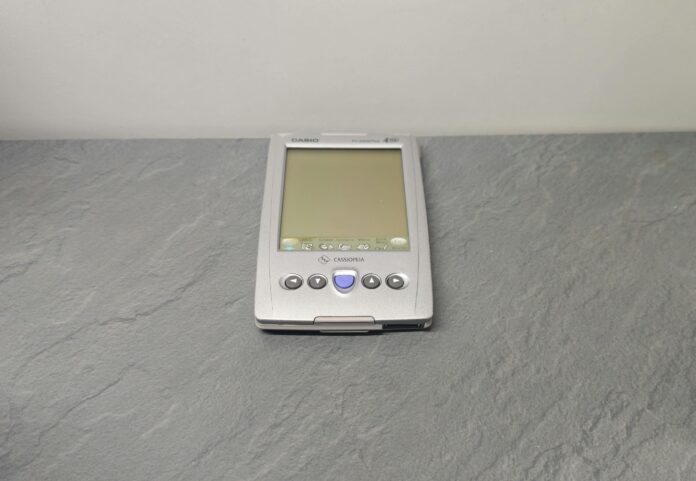

The Casio PV-S400 Plus, released in the early 2000s, is part of Casio’s Pocket Viewer family — a series of compact, affordable personal digital assistants (PDAs) designed for productivity on the go. Positioned as a simpler and more accessible alternative to high-end Palm or Windows CE devices, the PV-S400 Plus delivered essential organizer functions, a clean touchscreen interface, and PC connectivity in a durable, pocket-sized form.
Today, the PV-S400 Plus is a charming and often overlooked piece of early mobile computing history, representing the transitional era between basic electronic organizers and full-fledged smartphones.
📘 Introduction
In the late 1990s and early 2000s, Casio expanded its decades-long legacy of electronic organizers with the Pocket Viewer line. The PV-S400 Plus sits among the most refined models, offering:
-
touchscreen controls
-
stylus interaction
-
calendar, contacts, notes & to-do lists
-
PC synchronization
-
expandable applications
-
low power consumption
Before smartphones became universal, devices like the PV-S400 Plus helped users manage their daily life digitally for the first time.
🎨 Compact & Practical Design
The PV-S400 Plus features the classic Casio PDA aesthetic:
-
Lightweight and slim body
-
Monochrome touchscreen
-
Durable plastic shell
-
Direction pad & function buttons
-
Side-mounted stylus slot
-
Simple, elegant layout focused on productivity
Its small size and rugged construction made it ideal for pockets, bags, and everyday travel.
⚙️ Hardware Features
Though simple by modern standards, the PV-S400 Plus was advanced for its time.
Key Specifications
-
Monochrome LCD touchscreen
-
Stylus input
-
16 MB internal memory (varies by model)
-
Processor optimized for organizer functions
-
Power-efficient OS developed by Casio
-
Runs on AAA batteries
-
IR (Infrared) port for data transfer
Casio prioritized long battery life and reliability over raw power — a smart choice for mobile professionals in the early 2000s.
📂 Core Applications
The PV-S400 Plus includes a suite of essential productivity tools:
Organizer Functions
-
Calendar with daily, weekly, and monthly views
-
Contacts with multiple fields
-
Task manager / To-do list
-
Memo pad
-
World time
-
Calculator
Connectivity
-
PC synchronization via USB or serial (depending on version)
-
IR transfer to other Pocket Viewer devices
Expandable Software
Casio provided downloadable apps and utilities via its Pocket Viewer software ecosystem — a precursor to modern app stores.
🖊️ Touchscreen & Stylus Experience
Long before capacitive touchscreens existed, the PV-S400 Plus used a resistive touchscreen:
-
Accurate stylus input
-
Easy handwriting-style data entry
-
On-screen buttons and menus
-
Drag-and-select tasks
The stylus made the device precise and intuitive, especially for note-taking and navigation.
🔋 Exceptional Battery Life
The PV-S400 Plus operated on standard AAA batteries, providing:
-
Weeks of use on a single set
-
Instant-on functionality
-
No need for frequent charging
A huge advantage compared to early rechargeable PDAs that struggled with battery drain.
🛠️ Build Quality & Reliability
Casio devices are renowned for their durability, and the PV-S400 Plus is no exception.
Typical issues include:
-
Faded screens with age
-
Stylus tips wearing down
-
Battery corrosion if stored improperly
-
Rubber power button fatigue
However, most units remain fully functional decades later — a testament to Casio’s engineering.
🌍 Cultural & Historical Significance
The Casio PV-S400 Plus represents:
-
The transitional era from electronic dictionaries to true PDAs
-
A bridge between analog planners and digital calendars
-
Early attempts at portable productivity
-
Affordable access to personal digital data management
-
A step toward the smartphone revolution
It is a fascinating artifact of early 2000s mobile technology — simple, clean, and surprisingly capable.
📦 Items Included in This Collection Entry
-
Casio PV-S400 Plus unit
-
Stylus
📜 Conclusion
The Casio PV-S400 Plus is an elegant and compact reminder of the early days of handheld digital organization. With its monochrome touchscreen, stylus input, organizer suite, long battery life, and durable design, it remains a charming example of pre-smartphone mobile computing.
A rare and interesting collectible for enthusiasts — especially those who appreciate early PDAs and the evolution of pocket technology.