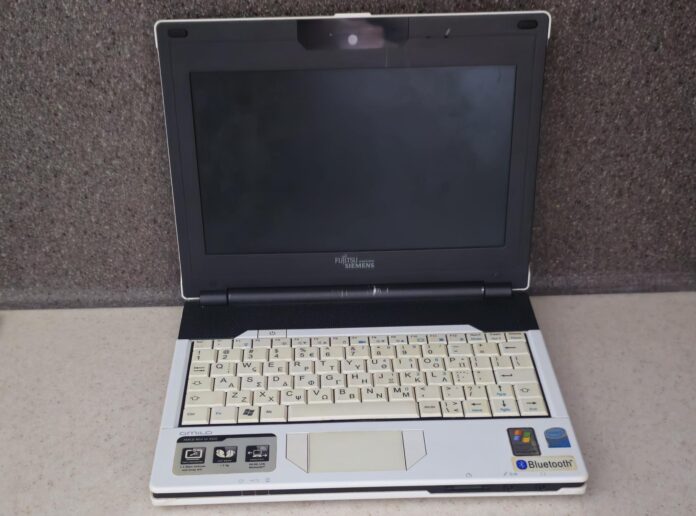

The Fujitsu Siemens Amilo Mini UI 3620, released around 2008–2009, belongs to the era of compact and affordable netbooks that transformed mobile computing. Designed for portability, everyday productivity, and lightweight internet use, this small but capable machine offered a fashionable alternative to bulkier laptops — with interchangeable coloured lids, a compact footprint, and solid build quality typical of Fujitsu Siemens systems.
Today, the Amilo Mini UI 3620 is a nostalgic reminder of the pre-tablet ultramobile boom, representing a time when netbooks made portable computing accessible to everyone.
📘 Introduction
In the late 2000s, netbooks became a global trend — small, low-cost laptops designed for:
-
web browsing
-
email
-
document editing
-
media playback
-
portability over performance
The Amilo Mini UI 3620 was Fujitsu Siemens’ entry into this booming market. Offering premium design touches and practical features, it distinguished itself from generic netbooks with:
-
a swappable lid system
-
a sturdy, compact chassis
-
full Windows compatibility
-
solid Wi-Fi connectivity
-
generous port selection
It became a popular choice among students, travellers, and home users who needed lightweight portability.
🎨 Design & Build Quality
The Amilo Mini UI 3620 stands out with its:
-
Compact 8.9-inch form factor
-
Interchangeable coloured lids (trend-setting for its time)
-
Matte and glossy finish combinations
-
Surprisingly strong hinge mechanism
-
Lightweight construction
-
Full QWERTY keyboard
Its stylish and fun appearance made it appeal to younger users and those wanting a more personalised digital device.
🖥️ Display & Multimedia
The system includes:
-
8.9-inch WSVGA display (1024×600)
-
Bright and clear panel
-
Good colour reproduction for its size
-
Integrated webcam for early-era video calls
Although small by modern standards, the screen was ideal for web browsing and basic productivity.
⚙️ Hardware Specifications
Typical configuration of the Amilo Mini UI 3620 includes:
-
Intel Atom CPU (N270) — the standard netbook processor of the era
-
1 GB RAM (expandable to 2 GB)
-
120 GB or 160 GB HDD
-
Intel GMA 950 integrated graphics
-
Wi-Fi 802.11b/g
-
2× USB ports
-
Ethernet port
-
VGA output
-
SD card reader
-
3-cell or 6-cell battery options
It was never meant for heavy tasks, but excelled at lightweight computing and portability.
🧳 Portability & Everyday Use
The Amilo Mini UI 3620 is incredibly easy to carry:
-
Weight around 1 kg
-
Small footprint
-
Long battery life for the time (up to 3–5 hours)
-
Ideal for travel, school, and cafés
Its efficient Atom processor kept heat low and battery life reasonable.
💼 Software & Operating System
The system typically shipped with:
-
Windows XP Home or Windows 7 Starter
-
Fujitsu Siemens utilities
-
Early-era web and email tools
Many enthusiasts today repurpose the device with:
-
Lightweight Linux distributions
-
Retro emulators
-
Classic software for older hardware
It remains surprisingly capable for retro computing tasks.
🛠️ Reliability & Common Issues
Netbooks were designed to be durable, and the Amilo Mini UI 3620 often remains fully functional today.
Common issues may include:
-
HDD wear or failure (can be replaced with SSD for major improvement)
-
Aging batteries
-
Cracked hinges if heavily abused
-
Yellowing plastic
-
Fading lid colours
Overall, it holds up well thanks to its simple, low-heat hardware design.
🌍 Cultural & Historical Significance
The Amilo Mini UI 3620 is an emblem of:
-
the netbook revolution, which temporarily reshaped portable computing
-
a time before tablets and Chromebooks dominated the budget mobile market
-
early attempts at stylish, customizable laptops
-
the shift toward ultra-portability and low-cost hardware
Although netbooks eventually disappeared with the rise of more powerful mobile devices, systems like the Amilo Mini remain charming and historically important.
📦 Items Included in This Collection Entry
-
Fujitsu Siemens Amilo Mini UI 3620 unit
📜 Conclusion
The Fujitsu Siemens Amilo Mini UI 3620 is a stylish and nostalgic piece of late-2000s mobile computing history. Combining portability, personalisation, and practical design, it represents an era when netbooks made laptops truly accessible and travel-friendly.
Today, it’s a delightful collectible — especially for fans of vintage mobile tech, retro computing, and early ultraportable devices.