
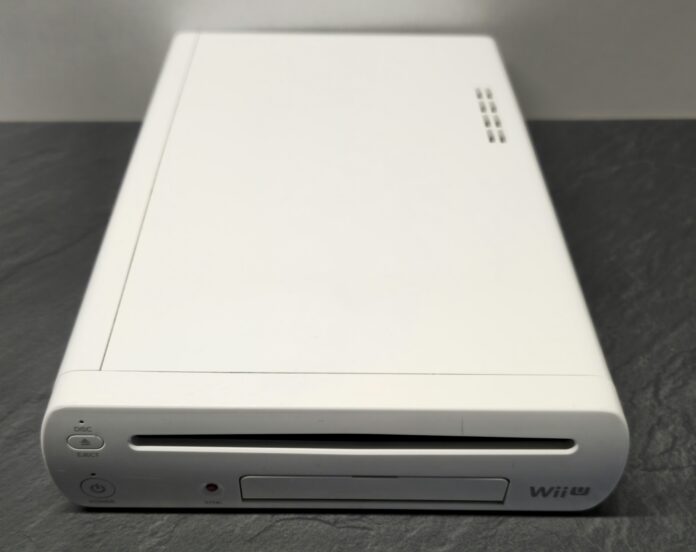

The Nintendo Wii U, released in 2012, is one of Nintendo’s most unique and experimental consoles. Combining traditional TV gaming with a touchscreen GamePad controller, it introduced concepts and mechanics that later evolved into the Nintendo Switch. Despite its limited commercial success, the Wii U has become a beloved cult favourite thanks to its creative gameplay ideas, backwards compatibility, and excellent library of exclusive titles.
📘 Introduction
Following the massive success of the Wii, Nintendo set out to create a system that bridged handheld and home console experiences. The result was the Wii U — a console centred around asymmetric gameplay, second-screen interaction, and a new, tablet-like controller.
While its marketing struggled and adoption was slow, the Wii U became a playground for innovative game design. Many of its ideas were ahead of their time and formed the foundation for Nintendo’s most successful console ever: the Switch.
🎮 Wii U GamePad — A Console with a Built-In Second Screen
The Wii U’s defining feature is the Wii U GamePad:
- 6.2″ touchscreen (resistive)
- Built-in motion sensors
- Front-facing camera
- Microphone
- NFC reader for amiibo
- Traditional button layout
- Off-TV Play (play full games on the GamePad screen)
This allowed entirely new types of gameplay that used both the TV and the GamePad simultaneously.
🧠 Hardware & Performance
The Wii U features:
- IBM PowerPC-based tri-core CPU
- AMD Radeon GPU capable of 1080p output
- 2 GB RAM (1 GB dedicated to games)
- HDMI output as standard
- 8 GB (Basic) or 32 GB (Deluxe) internal storage
- Expandable storage via USB drives
While not as powerful as PS4/Xbox One, it outperformed the PS3 and Xbox 360 and delivered excellent Nintendo-quality games.
🔥 A Strong Library of Exclusive Classics
Although smaller than other consoles, the Wii U’s exclusive library is packed with some of Nintendo’s best first-party titles.
Top Exclusives
- Super Mario 3D World
- Mario Kart 8
- Super Smash Bros. for Wii U
- The Legend of Zelda: The Wind Waker HD
- The Legend of Zelda: Twilight Princess HD
- Pikmin 3
- Donkey Kong Country: Tropical Freeze
- Splatoon (franchise debut)
- Bayonetta 2
- Nintendo Land
Notable Third-Party & Indie Titles
- ZombiU
- Deus Ex: Human Revolution — Director’s Cut
- Shovel Knight
- Trine 2: Director’s Cut
Many Wii U exclusives later found new life on the Switch — proof of their high quality.
🎮 Backward Compatibility & Wii Mode
One of the Wii U’s biggest strengths is full backward compatibility with the Wii:
- Wii games run in “Wii Mode”
- Supports Wii Remotes, Nunchuks, Classic Controllers
- Compatible with Wii accessories (Balance Board, MotionPlus)
- Access to Virtual Console titles
This gave the Wii U access to a massive library of games from day one.
🌐 Online Features & Miiverse
The Wii U introduced a range of online and social features:
- Miiverse — a unique Nintendo social network for drawings, tips, and community posts
- eShop for digital games
- Web browser
- Video apps (Netflix, YouTube, etc.)
- System-wide messaging and communities
Miiverse, though discontinued, remains one of Nintendo’s most beloved social experiments.
🛠️ Build Quality & Reliability
The Wii U is well-built and generally reliable:
- Quiet cooling system
- Sturdy GamePad (despite being lightweight)
- Replaceable batteries for GamePad
- Minimal hardware failures compared to competitors
Most systems remain in excellent working condition today.
📱 Wii U GamePad Challenges
Despite its innovation, the GamePad did present challenges:
- Low battery life (3–5 hours)
- Lower-resolution screen
- Short wireless range from the console
- Confusion in marketing (many thought it was an accessory for the Wii)
Still, its unique gameplay possibilities make it a beloved part of Nintendo history.
🌍 Cultural Impact
The Wii U’s commercial performance was modest, but its influence was enormous:
- Introduced the idea of portable/home hybrid gaming
- Inspired the design philosophy of the Nintendo Switch
- Debuted beloved franchises like Splatoon
- Served as a testing ground for HD Nintendo development
- Became a favourite of collectors for its uniqueness
Today, the Wii U is recognised as an important transitional console in Nintendo’s evolution.
📦 Items Included in This Collection Entry
📜 Conclusion
The Nintendo Wii U is a fascinating and innovative console that introduced bold ideas ahead of their time. Its blend of touchscreen controls, dual-screen gameplay, full Wii compatibility, and strong library of exclusives make it a hidden gem in Nintendo’s history.
Though overshadowed commercially, the Wii U’s legacy lives on through the Nintendo Switch and the fans who appreciate its creativity and charm.
A unique, forward-thinking console — and a standout addition to any retro gaming collection.